
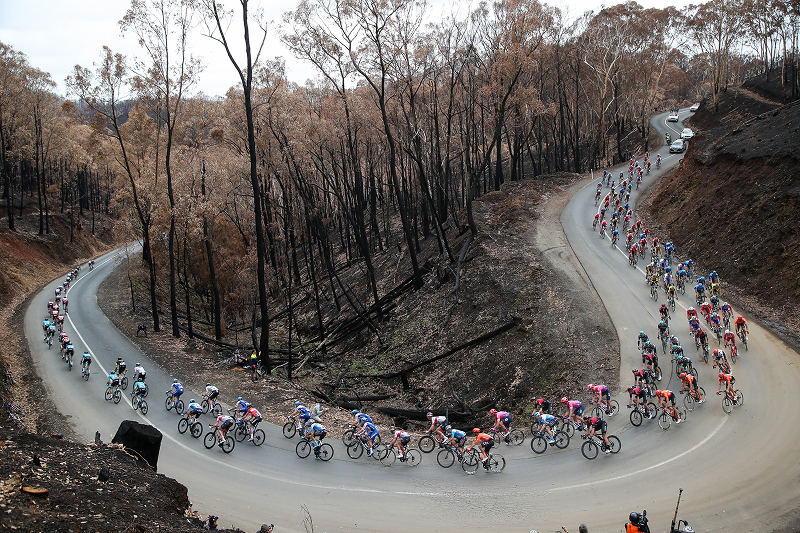
We're fighting for a clean and viable future for the Tour Down Under
Connect with the community working toward a safe future for our sport.
Oops! Something went wrong while submitting the form.
Connect with the community working toward a safe future for our sport.
Rising temperatures and bushfires have repeatedly disrupted the Tour Down Under, impacting athlete health, forcing route changes and stage cancellations.


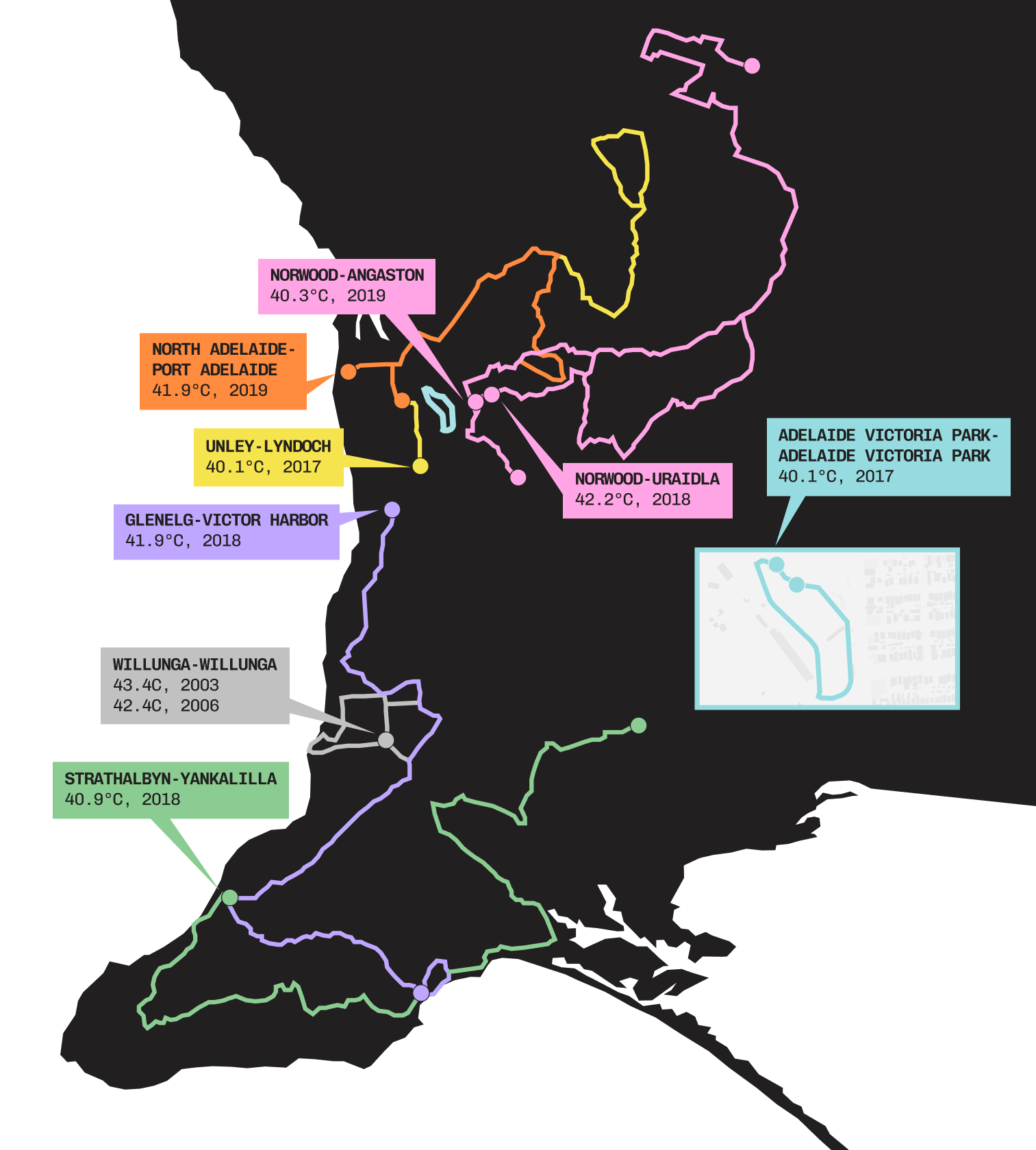
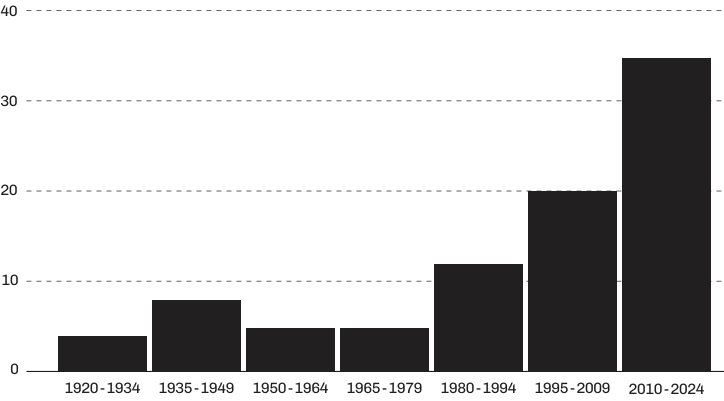
Extreme heat is a constant threat: Adelaide’s 2014 summer saw 13 days over 40°C. Since then, multiple stages have been shortened either before or during the race due to dangerous temperatures — including in 2017, 2018, and 2019. Organisers have redesigned stages to allow for loops that can be cut short, and to ensure fire access routes.
Bushfire impacts became stark in 2020, when riders passed through scorched landscapes. Winner Sam Bennett described scenes “like something out of a film about the end of the world.”
In 2024, oppressive heat disrupted the race again, most notably when it contributed to Jayco AlULa’s Caleb Ewan withdrawing from the Down Under Classic criterium.
Over the past century, Adelaide has seen a clear increase in the number of extreme heat days (40C and above)
Increase in 40+ days over the past century. Data from the Australian Bureau of Meteorology.
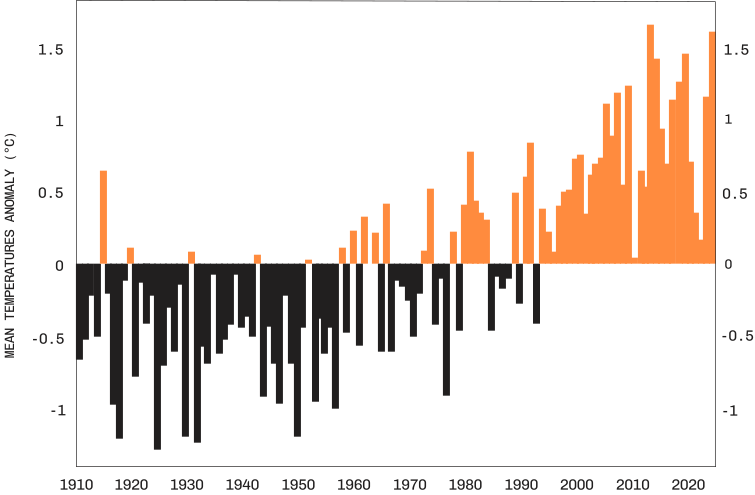
Annual mean temperature anomaly South Australia (1910 to 2024)
(Adelaide ACORN-SAT station data used for all years up to 2024. ADELAIDE AIRPORT M.o. weather station data used to calculate 2025 stages in heat as ACORN-SAT data is not yet available.)
Tour Down Under stages in heat:
68 men’s & 17 women’s

8 men’s & 1 women’s
These patterns show that climate extremes are not a future threat but a present reality for one of Australia’s premier sporting events, even as it continues to bear the name and sponsorship of fossil fuel giant Santos.
.png)
.png)
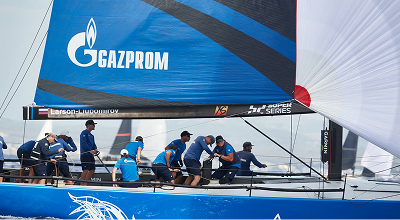
Sport has long been a key arena for fossil fuel companies to polish their public image – from major event sponsorships to naming rights and grassroots programs. These partnerships can serve as powerful “greenwashing” tools that distract from the environmental damage caused by the fossil fuel industry.
These six resources explore the depth of fossil fuel influence in sport, and the growing movement to end it.


The TDU is publicly owned and managed by the events division of the South Australian Tourism Commission, yet is headlined by Santos, one of Australia’s biggest polluters.
State budget papers show the government committing millions of dollars over coming years to support and improve the race. There has been speculation about Santos' contribution, but the value of the fossil fuel company’s sponsorship has not been disclosed. Requests for transparency about the contribution have to date not been acceded to.

‘Santos’ stands for South Australia Northern Territory Oil Search, the company's original name when it was founded in 1954. According to the Santos website,
“Today it is one of Australia’s largest domestic gas producers and a major LNG (liquified natural gas) exporter to Asia, with operations across Australia, Papua New Guinea, Timor-Leste and beyond.’’
The company has several major projects with emissions that will extend well beyond 2050.
While Santos has targets to reduce its operational (Scope 1 and 2) greenhouse gas emissions and achieve net-zero by 2040, these targets do not apply to Scope 3 emissions – which are generated when its gas is burned by end users. These emissions make up the majority lifecycle greenhouse emissions associated with gas production. In 2024, Santos reported that 88% of its emissions were Scope 3.
Santos’ emissions reduction strategy relies in part on the future performance of carbon capture and storage technologies. Serious questions remain about whether these technologies can deliver the level of emissions reduction necessary under 1.5C pathways.
Santos continues to pursue the development of new gas projects with lifespans extending for decades into the future. This approach sits in direct tension with guidance from the International Energy Agency and the UN, which say that new oil and gas projects are not consistent with modelled pathways limiting global warming to 1.5°C.
Information about Santos’ new projects can be found on the company’s website.
Santos uses sport as a central platform for its brand
In addition to the TDU, Santos sponsors a range of other sports in Australia and the Pacific:
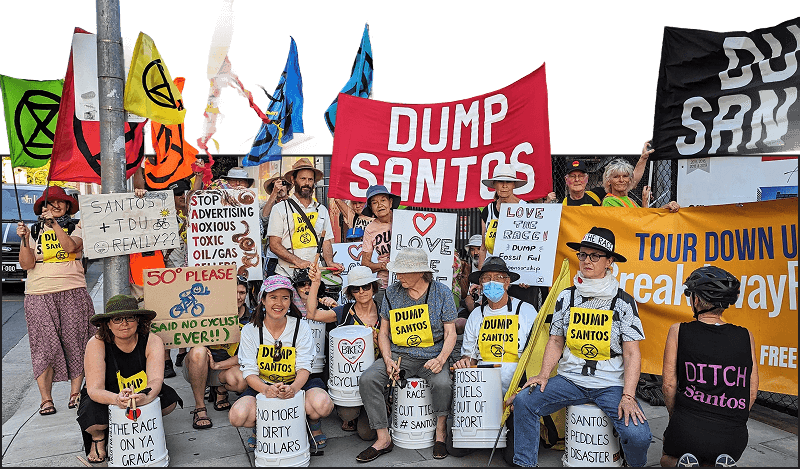
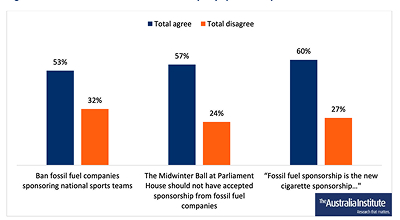
The Australian Greens, Australian Conservation Foundation, Extinction Rebellion, and Fossil Free SA have all challenged Santos’s TDU sponsorship, with petitions and protests calling for the event to drop fossil fuel backing. In 2024, 8000+ South Australians signed a petition tabled in Parliament by politician Tammy Franks.
Professional cyclists Grace Brown, Cyrus Monk, Jack Marshall, Kirsty Deacon and Stuart Alexander also signed a statement calling for an end to the deal.
Despite all this, the terms of the TDU deal - including how much money Santos actually contributes - remain a mystery.
South Australia is dealing with a record-breaking drought impacting farmers, animals and bushland. At the same time, warmer ocean waters have led to a catastrophic algal bloom killing marine animals and devastating coastal communities and industry.
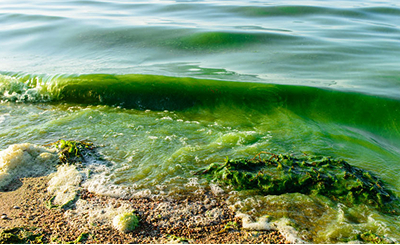
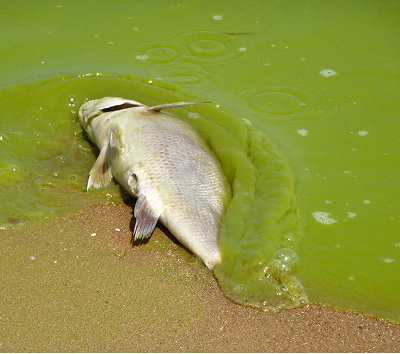

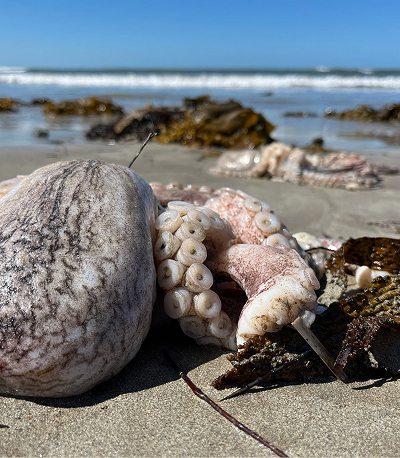

Over the past two years, rainfall in parts of South Australia hit record lows. Despite some relief in June and July 2025, last year’s rain was not enough to refill rivers or rebuild the water reserves critical for long-term farming and ecological recovery.
This drought points to a longer-term shift: for decades now, southern Australia’s cooler seasons have had below-average rainfall. The long-term decline in rain has placed sustained pressure on rivers, storages and ecosystems, and on the communities that depend on them.

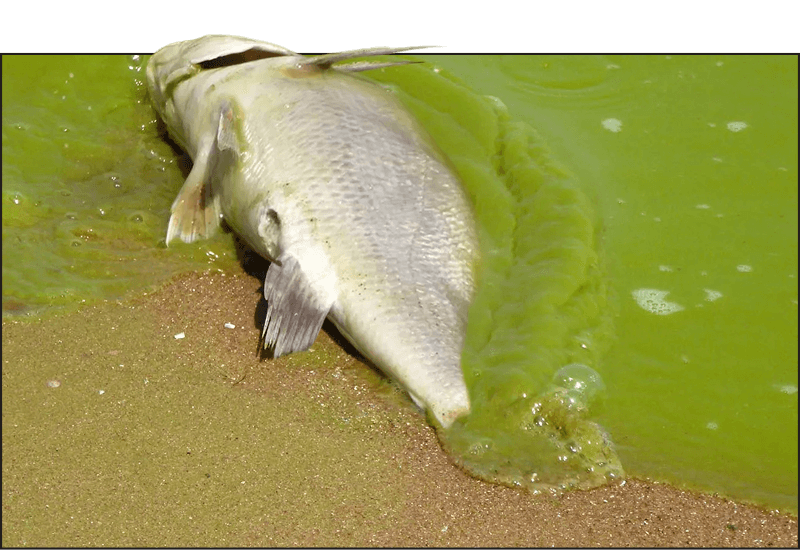
Since early 2025, an algal bloom in the waters off South Australia has been suffocating marine life by producing toxins and depleting oxygen. Within months of it first being detected, tens of thousands of marine animals, from hundreds of species, were reported dead. Thousands of fish, stingrays, seadragons and even dolphins have washed up along the coast.
The main culprit is a microscopic algae named Karenia, which under normal conditions is harmless. But in 2025, it multiplied massively and spread widely, impacting thousands of kilometres of ocean and coastline.
According to experts, a marine heatwave has contributed to the algal bloom that began in September 2024 and raised sea temperatures around 2.5C above normal.
The Tour Down Under should not belong to Santos. South Australia may be the home to this gigantic polluter, but the state also has a great clean energy story to tell. It’s a renewables powerhouse and has led the world in clean energy innovation.
Can a race celebrating endurance, nature and pedal power keep its credibility while sponsored by a major carbon polluter?
Can the Tour Down Under continue to run in peak summer as the world warms, fuelled by products of its naming rights sponsor?
It’s time to make some noise about the hypocrisy of this sponsorship, and all fossil fuel sponsorships in cycling.
We love sport and we want to see it thrive. We understand the resourcing challenges sport faces. But let’s contemplate a tour with clean, value-aligned sponsors – aligned to our future, not entrenched in the past.